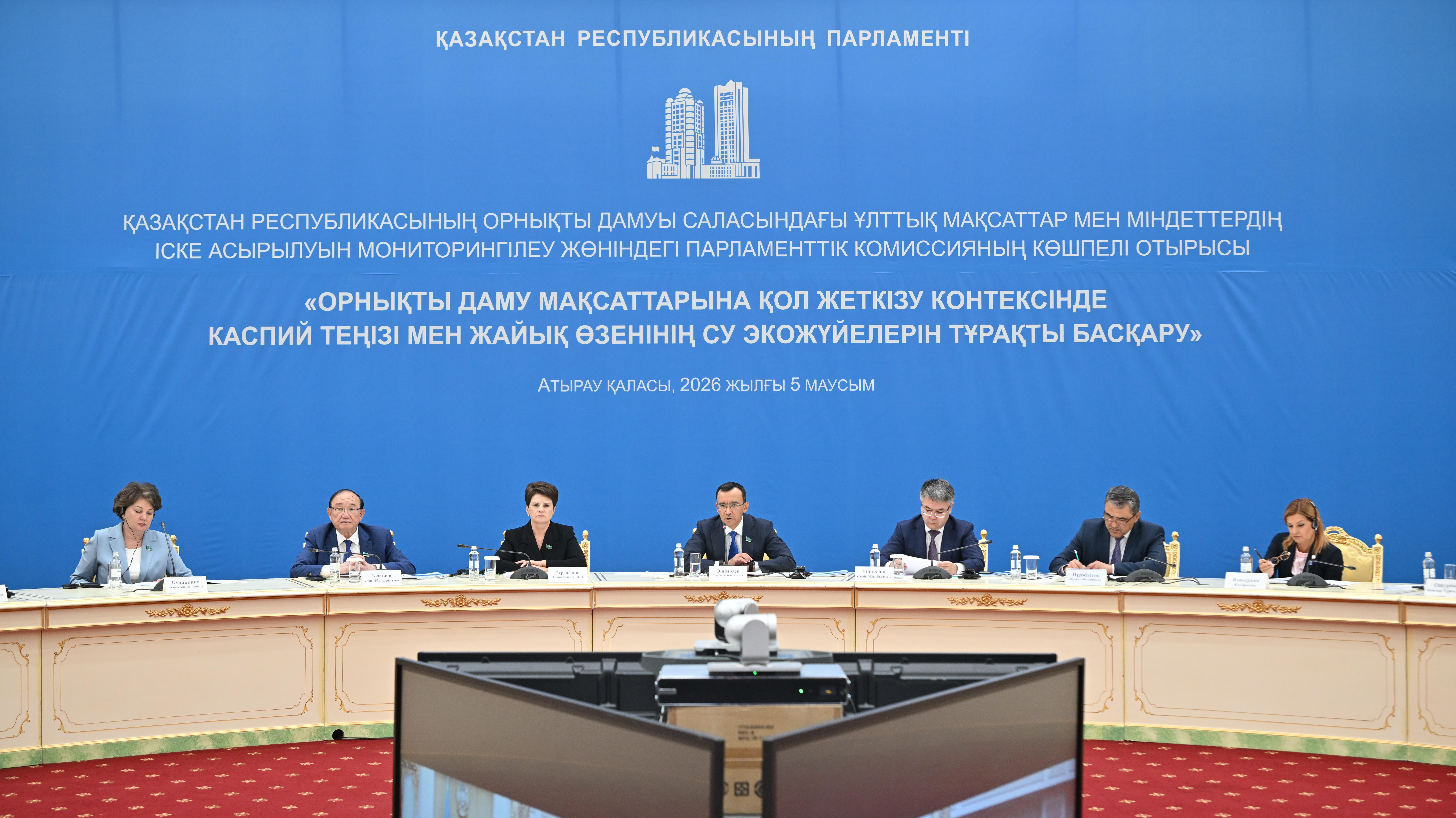
The 12th meeting of the Parliamentary Commission for Monitoring the Implementation of National Sustainable Development Goals and Objectives of the Republic of Kazakhstan was held today in Atyrau, chaired by Senate Speaker Maulen Ashimbayev. Participants raised issues of sustainable management of the aquatic ecosystems of the Caspian Sea and the Zhaiyk River in the context of achieving the Sustainable Development Goals. Senators also met with the public and employees of several social and industrial facilities in the region.
During the parliamentary commission meeting, environmental issues affecting the region's watersheds were highlighted. In particular, according to the Senate Speaker, issues related to pollution, declining fish populations, and increasing anthropogenic impacts on the region's ecosystems require special attention.
"President Kassym-Jomart Kemelevich Tokayev has repeatedly emphasized that the rapid decline in the Caspian Sea level has ceased to be a purely regional problem and has become global in scope. As a practical response, Kazakhstan has initiated the development of an Interstate Program for the Conservation of Water Resources in the Caspian Sea. Continuing to advance the international water agenda, the Head of State also proposed establishing a Water Analysis Center under the auspices of the SCO in Astana and proposed establishing the International Water Organization as a specialized UN agency. The issue of the Zhaiyk River is no less pressing. It is important to note that these issues cannot be considered in isolation. They require interagency coordination, scientifically sound solutions, and the active participation of local executive bodies, the expert community, environmental public associations, and international partners," said Maulen Ashimbayev.
The lack of a systematic approach to the decline of the Caspian Sea was also noted during the meeting. In the Zhaiyk Delta area and the coast of the Mangystau Region, the coast has retreated by 30-35 kilometers, leading to soil salinization, ecosystem degradation, and the loss of spawning grounds. The risk of dust storms containing toxic sediments is increasing. The chairman of the parliamentary commission emphasized that preserving the Caspian Sea and the Zhaiyk River is a matter of long-term environmental security, quality of life for citizens, and the sustainable development of the entire Caspian region, outlining key tasks for the upcoming joint work of the government, science, the public, business, and international partners to achieve the SDGs.
Along with members of the Senate and Mazhilis of the Parliament of the Republic of Kazakhstan, the meeting of the parliamentary commission was attended by Minister of Water Resources and Irrigation Nurzhan Nurzhigitov, Akim of Atyrau Region Serik Shapkenov, and representatives of the Ministries of Agriculture, Ecology and Natural Resources, and National Economy.
Presentations were also made by UNDP Resident Representative in Kazakhstan Katarzyna Wawiernia; Bulat Yessekin, international expert on water management and climate change and coordinator of the Central Asian Platform on Water Management and Climate Change; heads of regional akimats; and representatives of public and international organizations.
Government officials and experts presented recommendations and initiatives for further joint work, the implementation of which, as the Senate Speaker noted, will be monitored by the public and stakeholders.
During a meeting with young people, the Speaker of the Chamber highlighted key aspects of the Basic Law, describing the document as a long-term vector for the development of the state and the modernization of the political system through a comprehensive institutional overhaul. Taken together, these changes will create a flexible government structure capable of quickly responding to modern challenges. He also emphasized that the implementation of legislative amendments directly depends on the engagement of young people, their knowledge, and their willingness to take responsibility for the fate of the country.
"At the initiative of President Kassym-Jomart Kemelevich Tokayev, a new draft Constitution was developed and adopted by citizens in a nationwide referendum on March 15. The Basic Law will officially come into force on July 1. This truly People's Constitution has opened a new stage in building a Just Kazakhstan, where Independence, Statehood, and the rights and interests of citizens are the highest values. Essentially, all the current large-scale changes and the updated institutional environment are being created for the benefit of future generations. The new Constitution opens up great opportunities for young people, but also imposes serious responsibilities. The younger generation must deeply understand the historical significance of the reform and take an active part in its implementation," the Speaker of the House of Parliament said, addressing the meeting participants.
Emphasizing the importance of youth active participation in building a Just Kazakhstan, Maulen Ashimbayev also spoke about the government's support measures and emphasized the values that define the nation's new identity. He emphasized that the guiding principle on this path is President Kassym-Jomart Tokayev's concept of "Adal Azamat," which, based on Abai's teachings of "Tolyk Adam," defines hard work, integrity, professionalism, continuous learning, and patriotism as the most important values for every person.
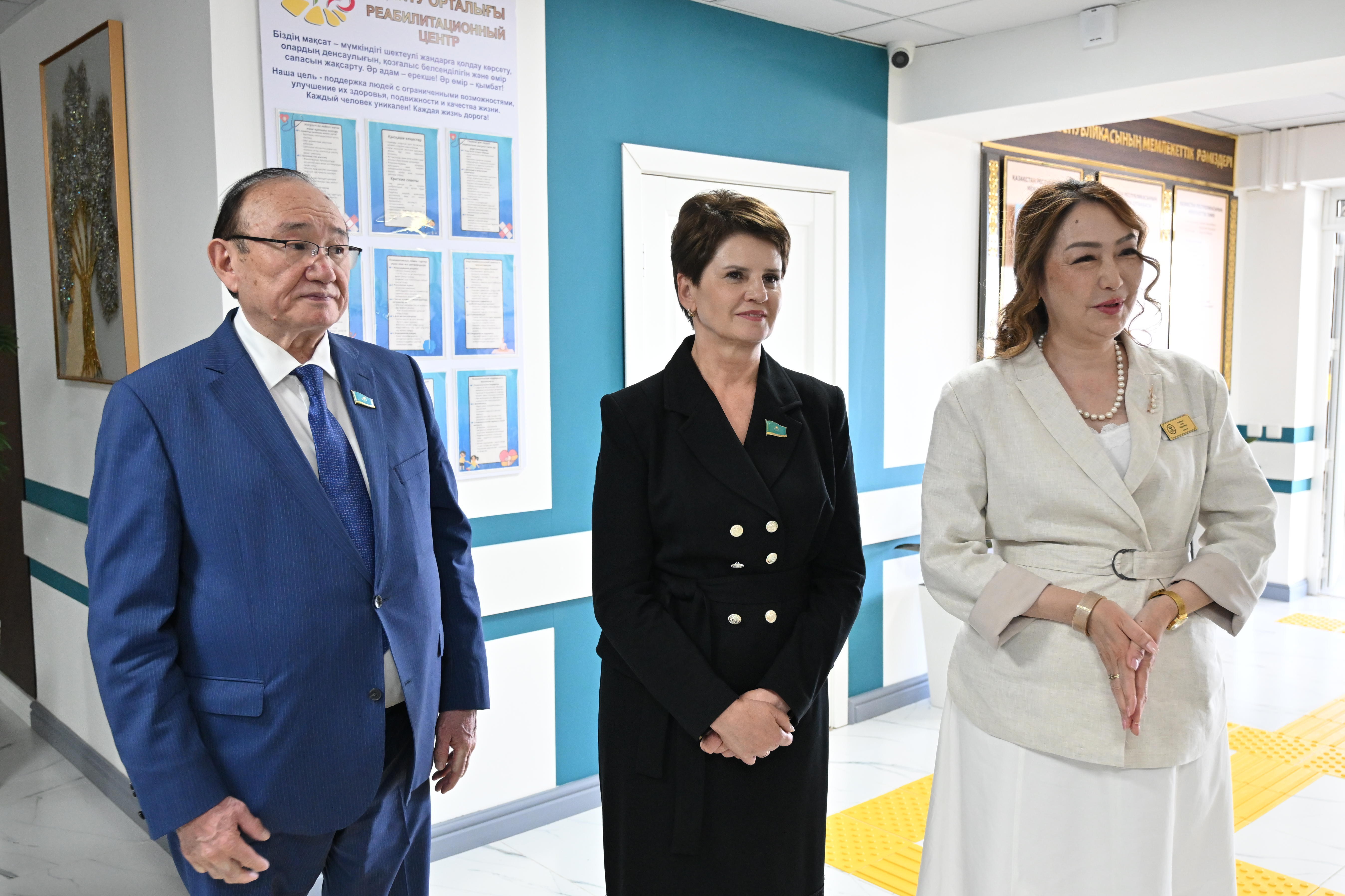
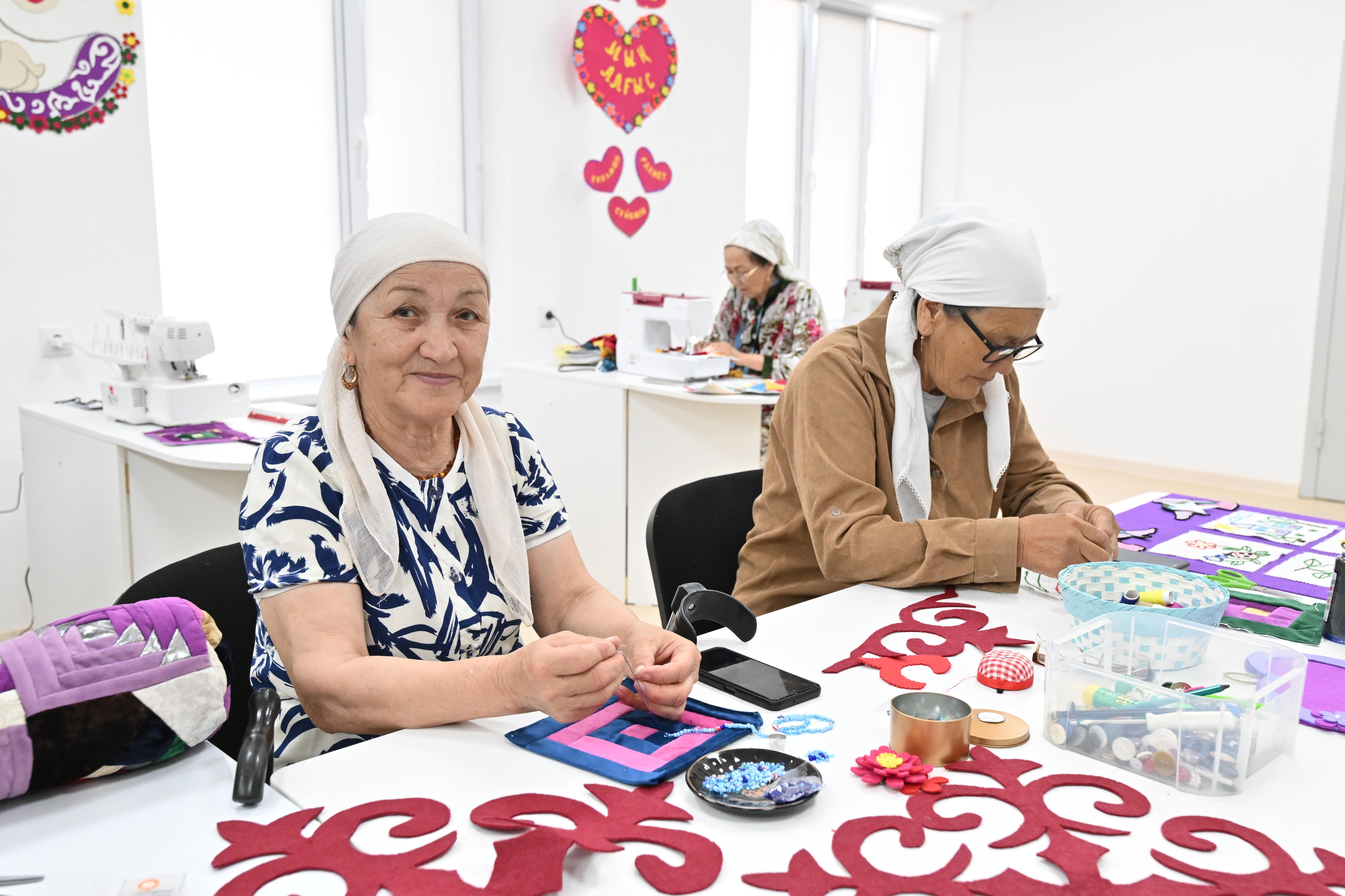
On this day, Senate deputies met with the staff of KazTurboRemont LLC and learned about the activities of the Almaly Center for Social Rehabilitation of Persons with Disabilities.
(Press Office of the Senate, 74-72-27. Photo by: N.Baibullin)